There is something unforgettable about meeting a tiger shark at Protea Banks. Powerful, calm, and incredibly graceful, tiger sharks are one of the most impressive predators in the ocean. Their bold stripes, massive presence, and slow confident movements make every encounter intense and humbling at the same time.
At Protea Banks, tiger sharks are mostly seen on baited dives, especially during the warmer months when ocean conditions bring more activity. They often appear silently from the blue, cruising calmly around the dive site, giving divers a moment they never forget.
Tiger sharks are powerful, solitary hunters and a vital part of marine ecosystems. Recognizable by their bold stripes and formidable size, they command respect in the ocean and are admired by divers for their strength and presence.
These sharks are fearless predators, capable of taking a wide variety of prey, and they play a key role in keeping marine environments balanced. Every encounter with a tiger shark is a thrilling reminder of the raw power and mystery of the underwater world.
Tiger sharks have a broad, blunt snout and a powerful, muscular body built for strength and speed, making them exceptional swimmers and hunters.
Their dark vertical stripes run along their sides like a tiger’s coat, fading as they mature, which gives them a striking and instantly recognizable appearance. They have large, serrated teeth shaped like miniature saws, perfect for cutting through tough prey such as turtles and fish. Their strong jaws can crush shells and bones, while their flexible bodies allow for agile movements in the water.
The tail is long and crescent-shaped, giving them bursts of speed, and their eyes are positioned to provide excellent vision both during daytime and in low-light conditions. Overall, every aspect of a tiger shark’s body is finely tuned for hunting and survival in the open ocean.
Tiger sharks are mostly solitary, roaming vast distances in search of food and exhibiting remarkable curiosity. They are opportunistic predators, meaning they will investigate and feed on almost anything they encounter, from fish and sea turtles to seabirds and even unusual objects in the water. This fearless, exploratory nature makes them both fascinating and unpredictable.
Despite their reputation, tiger sharks play a carefully balanced role in the ecosystem. By preying on weaker or sick individuals, they help maintain healthy populations of other marine species, preventing any one group from dominating and disrupting the environment. They often patrol coastal areas, reefs, and open waters, acting as guardians of balance across multiple habitats.
Tiger sharks are also highly adaptable, adjusting their hunting patterns and diet based on seasonal changes and prey availability. This flexibility allows them to thrive in diverse oceanic environments, from shallow tropical waters to deeper offshore regions. Their presence signals a healthy, well-functioning ecosystem, and observing them in the wild provides insight into the complex web of life beneath the waves.
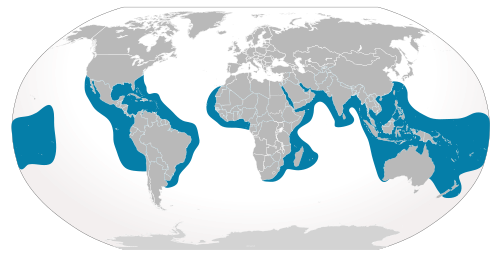
Tiger sharks are widely distributed in tropical and subtropical waters around the world. They are commonly found in the Atlantic, Pacific, and Indian Oceans, often near coastal areas, coral reefs, and around islands. While they can roam far offshore, they tend to stay in warmer waters, following seasonal movements that align with prey availability and breeding cycles.
In regions like Protea Banks, tiger sharks are regular visitors during certain times of the year, making these waters an ideal location for divers hoping to encounter them.
Their broad distribution and migratory behavior mean that they play an important role in connecting ecosystems across vast oceanic distances.
Tiger sharks travel long distances, following seasonal patterns between tropical and subtropical waters. These migrations often bring them close to popular dive sites, offering divers extraordinary opportunities to witness their majestic hunting and cruising behaviors in the wild.
Tiger sharks are currently listed as Near Threatened on the IUCN Red List, meaning their populations are at risk if threats continue unchecked.
The biggest dangers they face come from human activity, including commercial and recreational fishing, bycatch, and shark finning. Coastal development and habitat
degradation also impact their feeding and breeding grounds, reducing the availability of prey and safe areas for young sharks.
Despite these challenges, tiger sharks are resilient and highly adaptable. Conservation efforts, including protected areas, sustainable fishing regulations, and public awareness campaigns, are essential to safeguard their populations.
Protecting tiger sharks not only preserves these majestic predators but also helps maintain the balance of marine ecosystems, ensuring the health of oceans for generations of divers and wildlife alike.

Tiger sharks are among the most powerful and fascinating predators in the ocean. Their strength, curiosity, and adaptability make every encounter a truly unforgettable experience for divers. Seeing a tiger shark in the wild is not only thrilling but also a reminder of the importance of protecting these incredible animals and the ecosystems they help maintain. At places like Protea Banks, divers have the rare opportunity to witness these majestic sharks in their natural environment, creating memories that last a lifetime.