Ragged-tooth sharks are among the most iconic and dependable shark encounters at Protea Banks.
With their long, protruding teeth and muscular, rugged bodies, they may look intimidating at first glance, but their calm and steady behavior makes them surprisingly approachable for divers.
These sharks often glide slowly along the reef or hover motionless in the caves, using their unique ability to control buoyancy to appear almost suspended in the water.
Watching them in their natural environment is a rare and unforgettable experience, every movement exudes power and grace, while their serene presence adds a sense of tranquility that makes every dive both thrilling and peaceful. For underwater photographers, adventure seekers, and marine enthusiasts alike, encountering a school of ragged-tooth sharks at Protea Banks is a moment that stays with you long after you leave the water.
Despite their fearsome look, ragged-tooth sharks are calm and non-aggressive, often allowing divers to approach quite closely. They are known for their slow, energy-efficient swimming style and are frequently seen hovering motionless in caves or along reef ledges. These sharks are social compared to many other species, often forming small groups or aggregations, especially during certain times of the year.
Ecologically, they play an important role as mid-to-top predators, helping maintain balance within reef ecosystems. By feeding on fish and smaller marine species, they contribute to a healthy and stable underwater environment.
Ragged-tooth sharks primarily feed on fish, squid, and smaller sharks. They are nocturnal hunters, becoming more active at night when they leave their resting spots to hunt. Their sharp, pointed teeth are designed to grasp slippery prey rather than cut, allowing them to catch and swallow prey whole.
Ragged-tooth sharks have a strong, bulky body with a slightly flattened profile, giving them a slow, steady presence in the water. Their most noticeable feature is their long, needle-like teeth that protrude outward, even when the mouth is closed, creating a fierce look that contrasts with their calm nature.
Ragged-tooth sharks also have the ability to control their buoyancy by gulping and holding air in their stomach. This allows them to hover almost motionless in the water or inside caves, a unique behavior that makes encounters with them feel calm and almost suspended in time.
Their fins are broad and well-developed, designed for stability rather than speed. The large pectoral fins help them glide effortlessly and maintain neutral buoyancy, while the dorsal fins are set far back on the body, giving them a balanced, almost hovering movement. The tail is long and powerful but built more for cruising than fast bursts, allowing them to conserve energy as they move along the reef.
Their coloration ranges from sandy-grey to brown, perfectly suited for blending into the reef environment. Many individuals also display small dark spots scattered along their bodies, especially on the back half and tail. These subtle markings, combined with their muted tones, provide natural camouflage against the rocky reef and sandy bottom, making them both well-hidden predators and striking subjects for divers.
Ragged-tooth sharks are known for their seasonal migrations along the South African coastline. These movements are closely linked to breeding cycles, with large numbers arriving at Protea Banks during specific months. This predictable migration is what makes them one of the most reliable shark species to encounter in the area.
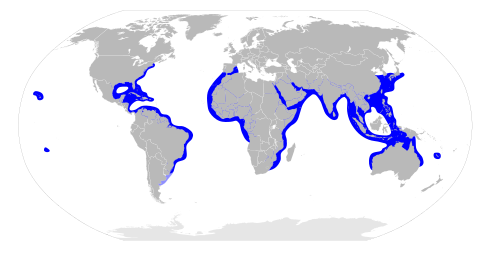
Ragged-tooth sharks are found in temperate and subtropical waters around the world, including the Atlantic, Indian, and Pacific Oceans. Along the South African coast, they are especially common and well-known, with Protea Banks being one of the top locations globally to dive with them.
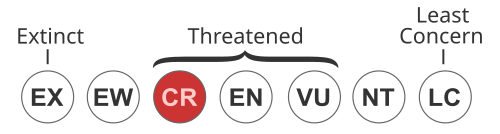
Ragged-tooth sharks are listed as Vulnerable on the IUCN Red List. Their slow reproduction rate makes them particularly sensitive to overfishing and human impact.
Threats include accidental capture in fishing gear, habitat disturbance, and historical overfishing.
Conservation efforts are crucial to protect their populations and ensure that future generations can continue to experience these remarkable sharks.
Diving with ragged-tooth sharks on Protea Banks is a unique experience. Their calm nature allows for longer, closer interactions, making them ideal for underwater photography and for divers who want a more relaxed shark encounter. At Protea Banks, divers can often see multiple individuals on a single dive, especially when they gather in caves and along reef structures.
Ragged-tooth sharks offer one of the most memorable and accessible shark diving experiences in the world. Their calm presence, combined with their striking appearance, creates a perfect balance of thrill and tranquility underwater.
At Protea Banks, ragged-tooth shark season typically runs from June to November, when large numbers gather along the reef. During this time, the caves of Protea Banks are often filled with these sharks, creating a truly spectacular sight and an unforgettable experience for any diver lucky enough to witness it.